Benefits
- Quick implementation and Ease-of-Use for lab personnel
- Use of existing spreadsheets and processes
- Enhancements/Upgrades and testing performed quickly
- Compliance and Validation Materials (Requirements, Risk Assessments, Validation Plans and Reports)
Situation
In May 2022, a prominent pharma lab within a large multifocus enterprise, operating in the biotech/manufacturing sector, faced a pivotal challenge. Tasked with integrating their highly specialized process — controlled expansion of multiple products to eliminate the possibility of cross-contamination — the lab relied on paper notebooks and spreadsheets. However, this approach fell short of meeting stringent compliance requirements, including Good Manufacturing Practices (GMP), product registration, and adverse event reporting.
The lab’s primary goals were clear: to meet compliance requirements and fully capture their spreadsheet-based process within an Electronic Laboratory Notebook (ELN)/front-end system. Despite using spreadsheet-based protocols and records for risk mitigation, they realized the need for a solution that would seamlessly integrate their existing processes while ensuring regulatory compliance.
Within this regulatory environment, compliance was paramount. Meeting these standards was not only essential for obtaining regulatory approval but also crucial for maintaining public trust and avoiding penalties such as fines, product recalls, and legal actions.
The lab sought a solution that would enable them to meet all compliance requirements without the need to rebuild their current processes around a Laboratory Information Management System (LIMS)/ELN.
Challenges
- Reliance on paper notebooks and spreadsheets for data/process management
- Need to integrate highly specialized process captured by spreadsheets with compliance requirements
- Desire to meet compliance requirements without overhauling current processes around a LIMS/ELN
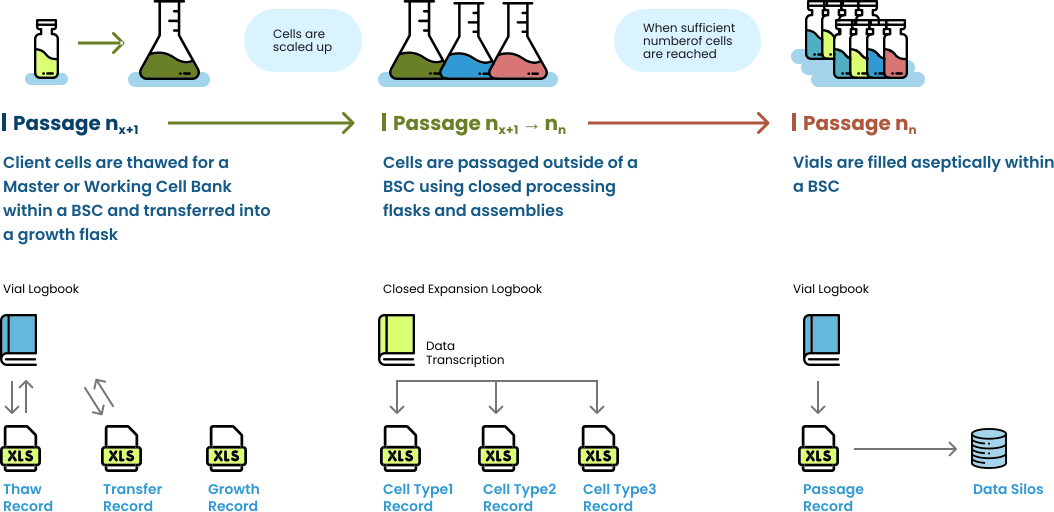
Legacy Cell Culture Workflow:
Challenges of Manual Documentation and Disjointed Data Management in the Absence of LIMS/ELN Integration
Impact:
The closed expansion process was scheduled to be implemented for production in 2023, necessitating a compliant and robust flask management process.
This customer joined forces with SciCord to transform their existing spreadsheets into a production-grade batch record system. This transformation involved the development of several modules to digitize all aspects of the process:
To initiate the batch record development process, the engineers provided SciCord developers with one or more workbooks. The workbooks laid out the process steps and defined the flow of materials and required calculations. The workbooks form the basis of the module and are integrated with LIMS. In a matter of days, the first iteration of a process is implemented (plug and play) in a test environment for review by the engineers. Typically, 2-4 iterations of each module are required to finalize the process. Each module can be developed and ready for documentation and testing in just a few weeks.
“Enhancements/upgrades and testing performed quickly.”
Streamlined Cell Culture Workflow:
Integrating LIMS/ELN Solutions to Enhance Efficiency, Traceability, and Compliance